Dinosaurs A:Z | Q
You may also be intrested in: Free Dinosaur games
Dinosaurs and other prehistoric animals:
Dimorphodon (Two-form Tooth)
You may also be intrested in: Free Dinosaur games
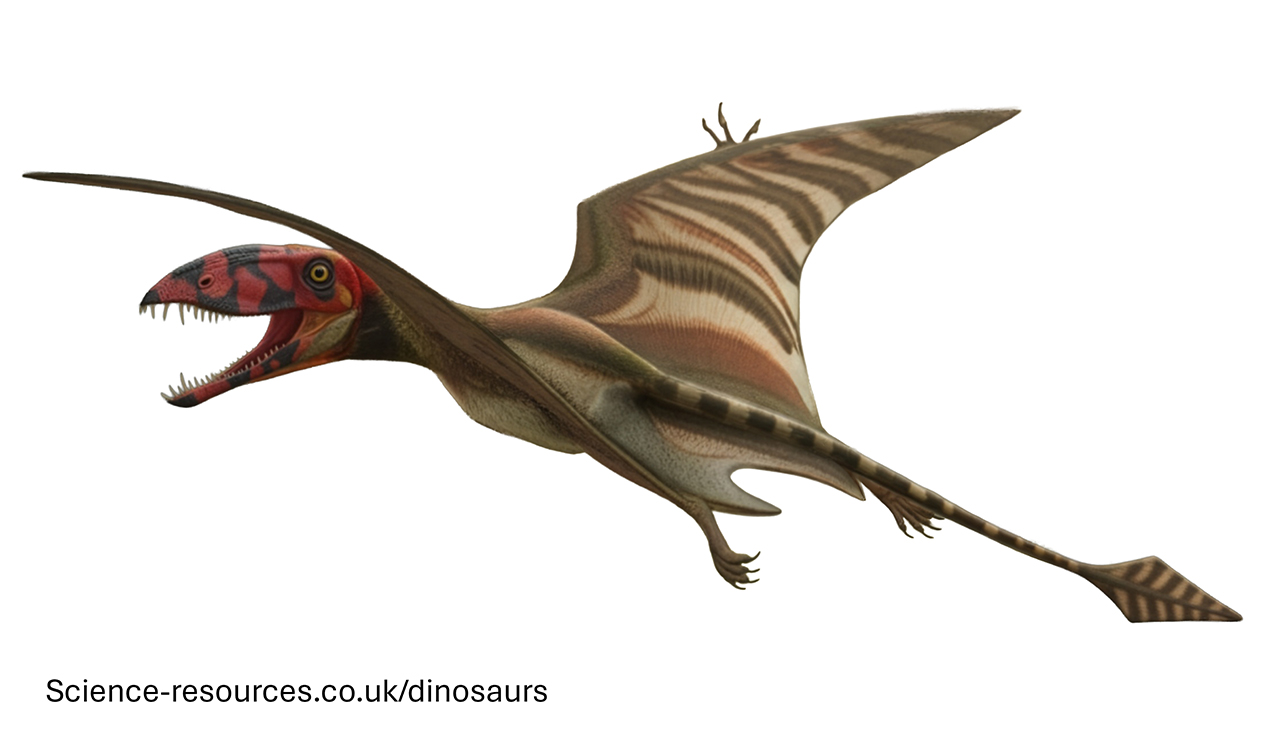
Dimorphodon was an early pterosaur, a type of flying reptile that lived during the Jurassic Period. While often mistaken for a dinosaur, Dimorphodon, like all pterosaurs, belonged to a separate branch of reptiles. Its name, “Dimorphodon”, means “two-form tooth”, referencing the different shapes of teeth in its jaws which is a unique feature among pterosaurs. Dimorphodon lived during the Early Jurassic Period, approximately 195 to 190 million years ago. Fossils have been found primarily in England, especially the Jurassic Coast of Dorset, as well as in parts of Mexico. These discoveries suggest Dimorphodon thrived in coastal and possibly inland environments, much like its later pterosaur relatives. Wingspan: Dimorphodon’s wingspan was much smaller than Quetzalcoatlus, measuring around 1.4 metres (about 4.5 feet). Body Size: Despite its modest wings, Dimorphodon had a relatively large, deep head compared to its body, and a long, stiff tail likely used for balance in flight. Its body was lightly built, with hollow bones adapted for flight. Dimorphodon had a distinct appearance with: What is a Dimorphodon?
When and Where Dimorphodon Lived
How Big Was Dimorphodon?
Appearance
Dimorphodon’s appearance was quite different from later pterosaurs, such as the large, long-necked Quetzalcoatlus, showing the diversity amongst pterosaurs.
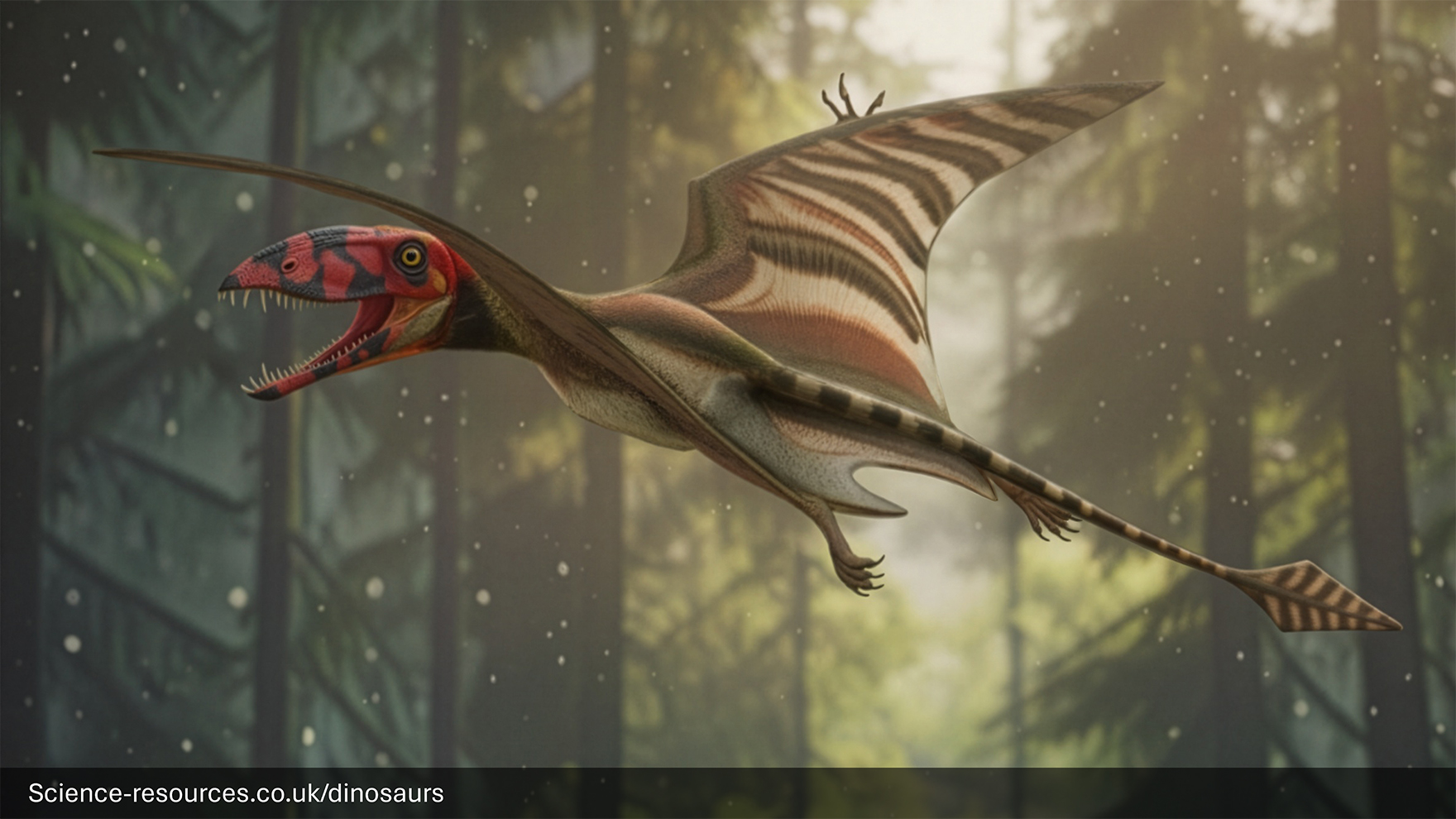 A flying Dimorphodon
What did Dimorphodon eat?
Dimorphodon was a carnivore. Its varied teeth suggest it had a mixed diet, likely including small vertebrates, insects, and possibly fish. Its strong jaws and different tooth shapes allowed it to grasp and crush prey, showing that it was a versatile feeder much like many pterosaurs.
Where did Dimorphodon live?
Dimorphodon fossils have been found in rock formations that were once coastal cliffs and islands. It likely lived near the sea, nesting or roosting on cliffs and hunting along shorelines, similar to the later pterosaurs such as Pteranodon and Quetzalcoatlus.
Interesting Facts
- The name “Dimorphodon” means “two-form tooth”, highlighting the unique teeth in its jaws.
- It was one of the earliest known pterosaurs with a well-preserved fossil record.
- Its strong limbs suggest it could clamber on the ground and possibly climb.
- Its long, stiff tail helped with balance and possibly in flight control.
- Dimorphodon’s fossils were first described by the famous Victorian palaeontologist Richard Owen in 1859.
Pronounced: Dye-mor-fo-don Name Means: "Two-form tooth" Wingspan: Approximately 1.4 metres (about 4.5 feet) Diet: Carnivore (small vertebrates, insects, possibly fish) Time: Early Jurassic (around 195 to 190 million years ago) Habitat: Coastal cliffs, islands, and shorelines
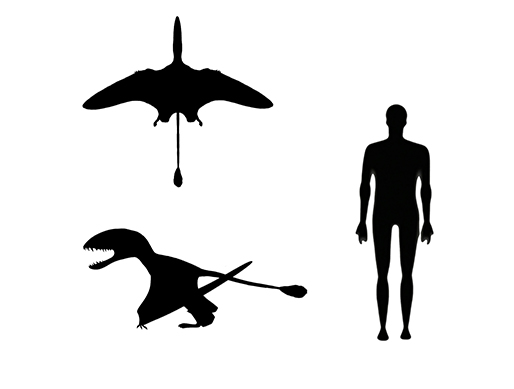
Fossils Found: Europe and South America
Dimorphodon was a member of the pterosaur family, specifically the suborder Rhamphorhynchoidea. This group is known for having long tails and less advanced flight adaptations compared to the later Pterodactyloidea, such as Pteranodon and Quetzalcoatlus. Both groups are distinct from dinosaurs, though they lived alongside them. Like other pterosaurs, Dimorphodon likely had a covering of hair-like filaments known as pycnofibres. These provided insulation and possibly helped with aerodynamics. Some pycnofibres may have branched like down feathers. Dimorphodon was capable of flight, using its strong wings to glide or flap between perches. On land, it probably walked on all fours, using both its feet and hands, and its strong limbs may have allowed it to climb trees or cliffs. Its flight style was likely less soaring and more flapping and gliding compared to later pterosaurs such as Quetzalcoatlus. Yes! Dimorphodon was well adapted for flight, with lightweight bones, elongated wings, and a tail for stability. It probably launched itself into the air from cliffs or trees, relying on powerful wing flaps. Q1: What is a Dimorphodon?
Dimorphodon is a genus of early pterosaurs known for its two different types of teeth and large head.
Q2: How big was Dimorphodon?
A2: It had a wingspan of about 1.4 metres (4.5 feet) and a body length of around 1 metre (3 feet).
Q3: What did Dimorphodon eat?
A3: It was a carnivore, eating small animals, insects, and possibly fish.
Q4: Where have Dimorphodon fossils been found?
A4: Fossils have been discovered in England and Mexico.
Q5: Did Dimorphodon have any special features?
A5: Yes, including its “two-form” teeth, long tail, and large head.
Q6: How did Dimorphodon move?
A6: It could fly and probably climbed or walked on all fours on the ground.
Q7: What’s the significance of Dimorphodon in pterosaur studies?
A7: Dimorphodon helps scientists understand early pterosaur evolution, especially jaw and tooth adaptations.
Q8: Did Dimorphodon have predators?
A8: As a small pterosaur, it may have been prey for larger reptiles or dinosaurs.
Q9: How do scientists study Dimorphodon fossils?
A9: Fossils are studied using traditional methods, with modern CT scanning sometimes used for more detail.
Q10: What have recent studies revealed?
A10: Recent research focuses on its flight capabilities, tooth structure, and ecological role in the Jurassic.
Generative AI Notification: Some elements of this image have been created or enhanced using AI technology. To find out how we create all our dinosaurs, click here.
Which family of reptiles did Dimorphodon belong to?
Did Dimorphodon have feathers?
How did Dimorphodon move?
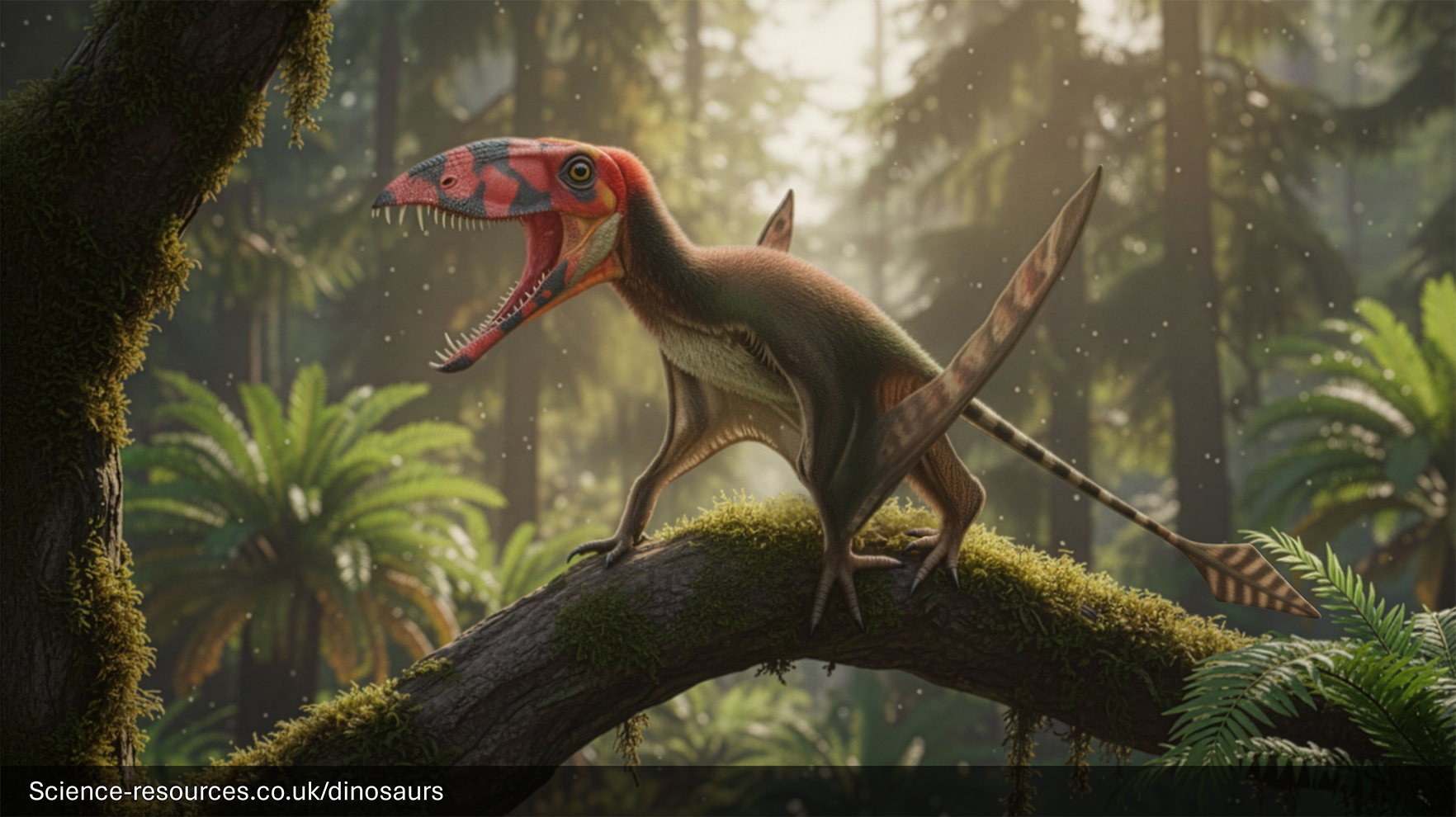
Could Dimorphodon Fly?
What were the unique features of Dimorphodon?
Dimorphodon FAQ
You may also be intrested in:
Tags: How big was Dimorphodon, Dimorphodon size, where does Dimorphodon live, Dimorphodon wing span, what does Dimorphodon mean, Dimorphodon, Dimorphodon