The process of breathing
The gas exchange system When you inhale, your diaphragm and intercostal muscles contract and move down and out. This makes your lungs bigger, which lowers the pressure inside them and draws air in. The air has a lot of oxygen that goes into the gas exchange system and then the body. When you exhale, your diaphragm and intercostal muscles relax and move up and in. This makes your lungs smaller, which pushes air out. The air has more carbon dioxide that leaves the body. The human gas exchange system
Breathing is also called ventilation. It has two phases: inhaling and exhaling.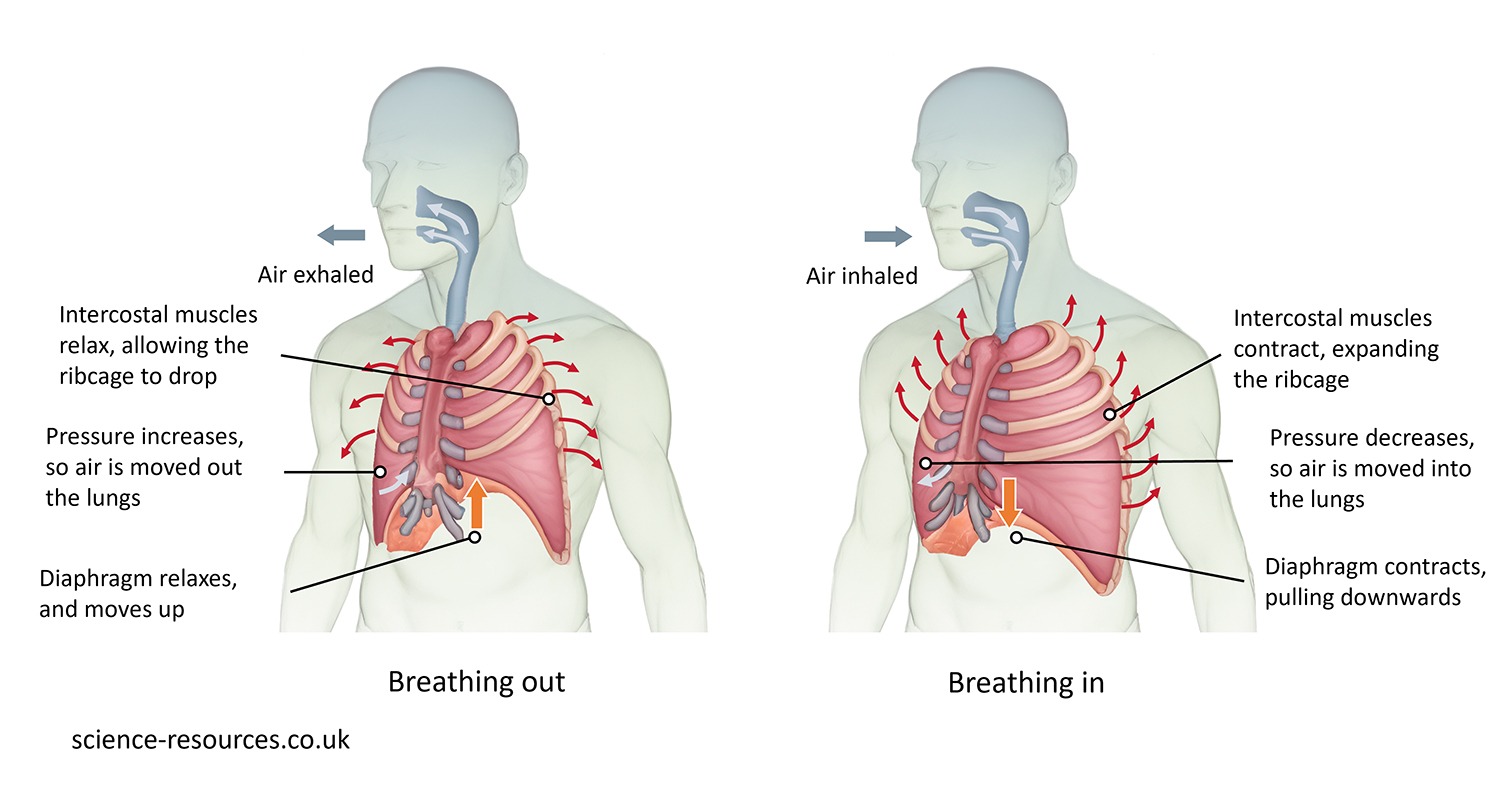
The gas exchange system has these parts and functions:
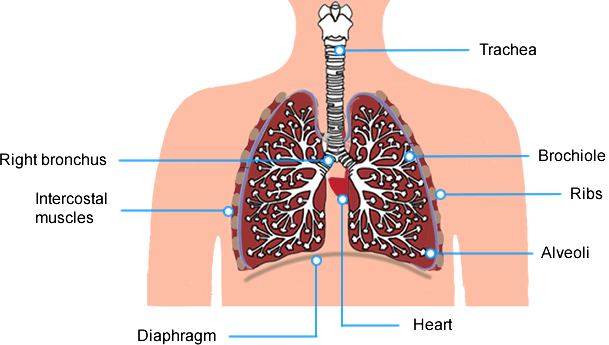
Alveoli Some water vapour also leaves the alveoli and goes into the lungs. We can see this water vapour when we breathe out on cold days. Note: Deoxygenated blood appears blue in this diagram for explanation purposes only.
The alveoli are small air sacs in the lungs where gas exchange happens. They take in oxygen from the air and give out carbon dioxide to the air. The oxygen is used for respiration, which is a process that releases energy from glucose that comes from food. Carbon dioxide is a waste product of respiration and needs to be removed.
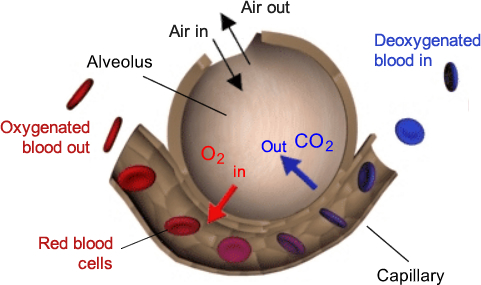
Alveoli have the following key features to maximise gas exchange:
Test your knowledge of the human respiratory system and how we breathe. 1. Which structure is also known as the windpipe? 2. What are the tiny air sacs where gas exchange occurs called? 3. When you inhale, what happens to the ribs? 4. Which muscle sits at the bottom of the chest and helps move air into the lungs? 5. During gas exchange, which gas moves from the alveoli into the blood? Summary: 🔬 Knowledge Check: Breathing and Gas Exchange
Click to Reveal Answers
2. Alveoli (Tiny sacs that provide a large surface area for gas exchange).
3. Upwards and outwards (This increases the volume of the chest cavity).
4. The diaphragm (It contracts and flattens to pull air in).
5. Oxygen (Oxygen is absorbed into the blood while carbon dioxide is removed).