Live Aurora Tracker


Aurora Tracker Pro

NOAA Live Satellite Feed

Live Connection
Syncing...

Planetary Kp Index

--
Scale G0
Initializing Data...

Fetching latest planetary geomagnetic measurements from NOAA...

Local Visual Probability

--% Sight Chance
Calculating...

Calculating probability based on the OVATION Prime model.

Target Coordinates
--.°, --.°
Magnetic Region
Scanning...

Observer Intelligence for your area

Processing environmental and geomagnetic variables...

Field Checklist

  • Bortle 1-4 Dark Sky
  • Clear Horizon View
  • Night Mode / Tripod

NOAA Space Weather G-Scale Official Standard

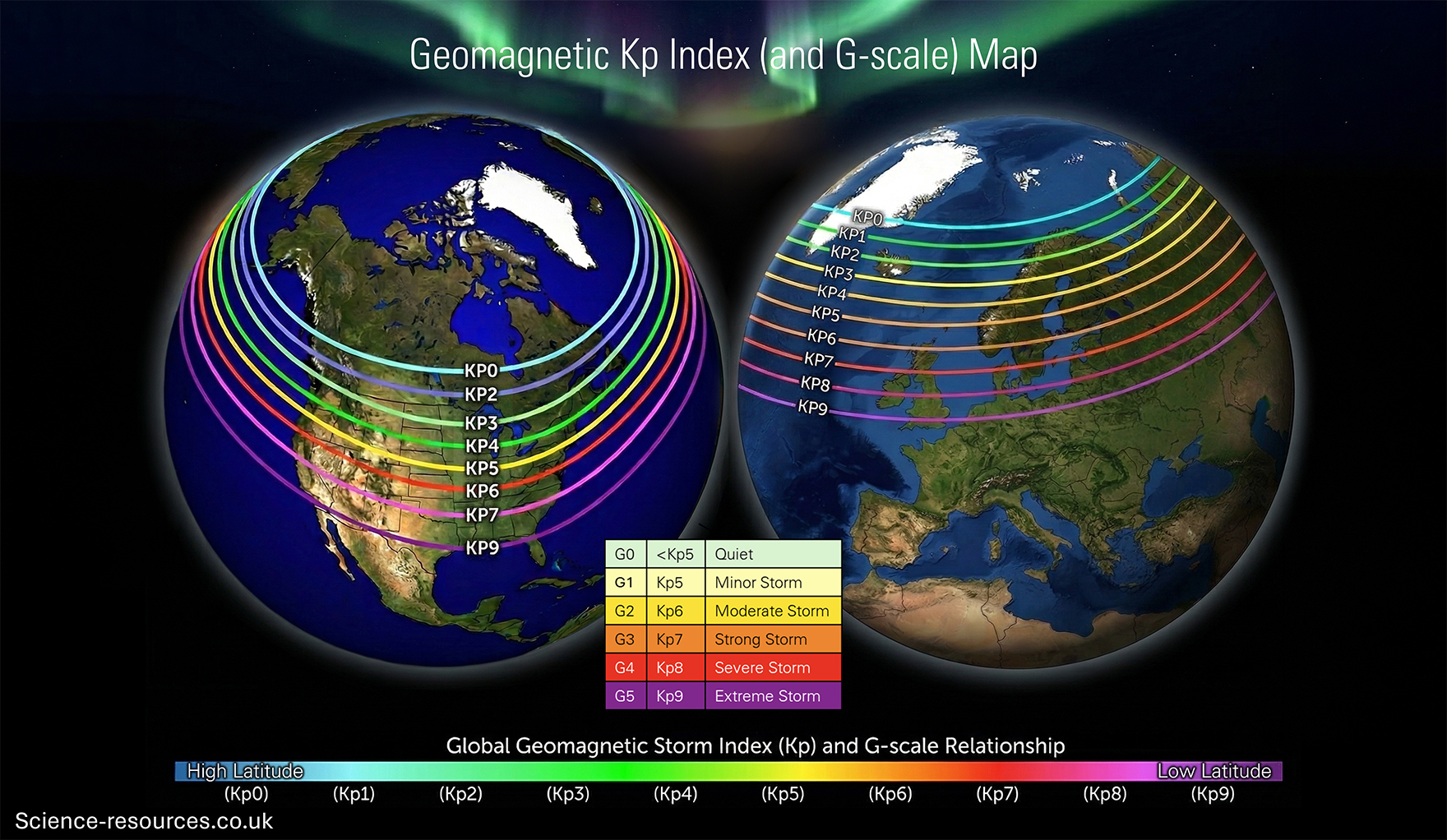
G0 Kp 0-4
Quiet / Active
Normal magnetic conditions. Aurora at high latitudes.
G1 Kp 5
Minor Storm
Aurora visible in Northern UK and Northern US border.
G2 Kp 6
Moderate Storm
Aurora visible across Midlands UK and mid-US states.
G3 Kp 7
Strong Storm
Aurora potentially visible to Southern UK/Europe/US.
G4/5 Kp 8-9
Severe / Extreme
Rare event. Aurora visible deep into lower latitudes.

Synchronizing with NOAA Space Weather Prediction Center API.

Real-Time OVATION Prime Model v2.0


A split graphic shows two illuminated globes side by side against a dark space background, illustrating how the geomagnetic Kp index relates to auroral visibility at different latitudes.

Geomagnetic Kp Index and G-Scale Map

Aurora Tracker: Frequently Asked Questions

What is the Kp Index?

The Kp index is a scale used to measure geomagnetic activity on a scale from 0 to 9. It acts as a general indicator of how strong the aurora might be and how far south it may be visible. Higher values indicate more intense geomagnetic activity, pushing the aurora further toward the equator.

What causes the Kp Index to increase?

Geomagnetic activity increases whenever Earth is struck by disturbances from the Sun. These events twist and stretch the planet’s magnetic field, releasing energy into the atmosphere that creates the glowing auroras. Common causes include:

  • High-speed solar wind streams: Fast-flowing particles released from coronal holes.
  • Solar Flares: Sudden, intense bursts of radiation.
  • Coronal Mass Ejections (CMEs): Large eruptions of solar plasma.
  • Geomagnetic Storms: Major disturbances in Earth's magnetosphere caused by solar activity.

What Kp level do I need to see the Aurora?

The required Kp level depends entirely on your location:

  • Arctic Regions: Even a low Kp of 1–2 is often enough for strong, vibrant displays.
  • Lower Latitudes: You will generally need a higher Kp (typically 5 or above) to see the aurora further south.

Is the Kp Index the only thing that matters for an Aurora hunt?

No. While the Kp index is a great tool for understanding overall conditions, it doesn't tell the whole story. For a successful hunt, you must also consider real-time factors such as:

  • Bz (Interplanetary Magnetic Field): Needs to be pointing "South" to allow solar energy into our atmosphere.
  • Solar Wind Speed: Faster speeds generally lead to more dynamic displays.
  • Cloud Cover: Even the strongest aurora cannot be seen through thick clouds.

How should I use this tracker?

Use the Kp index to understand the general potential for an aurora display on a given night, but always rely on live data (such as Bz and wind speed) and local weather forecasts when planning your actual departure.

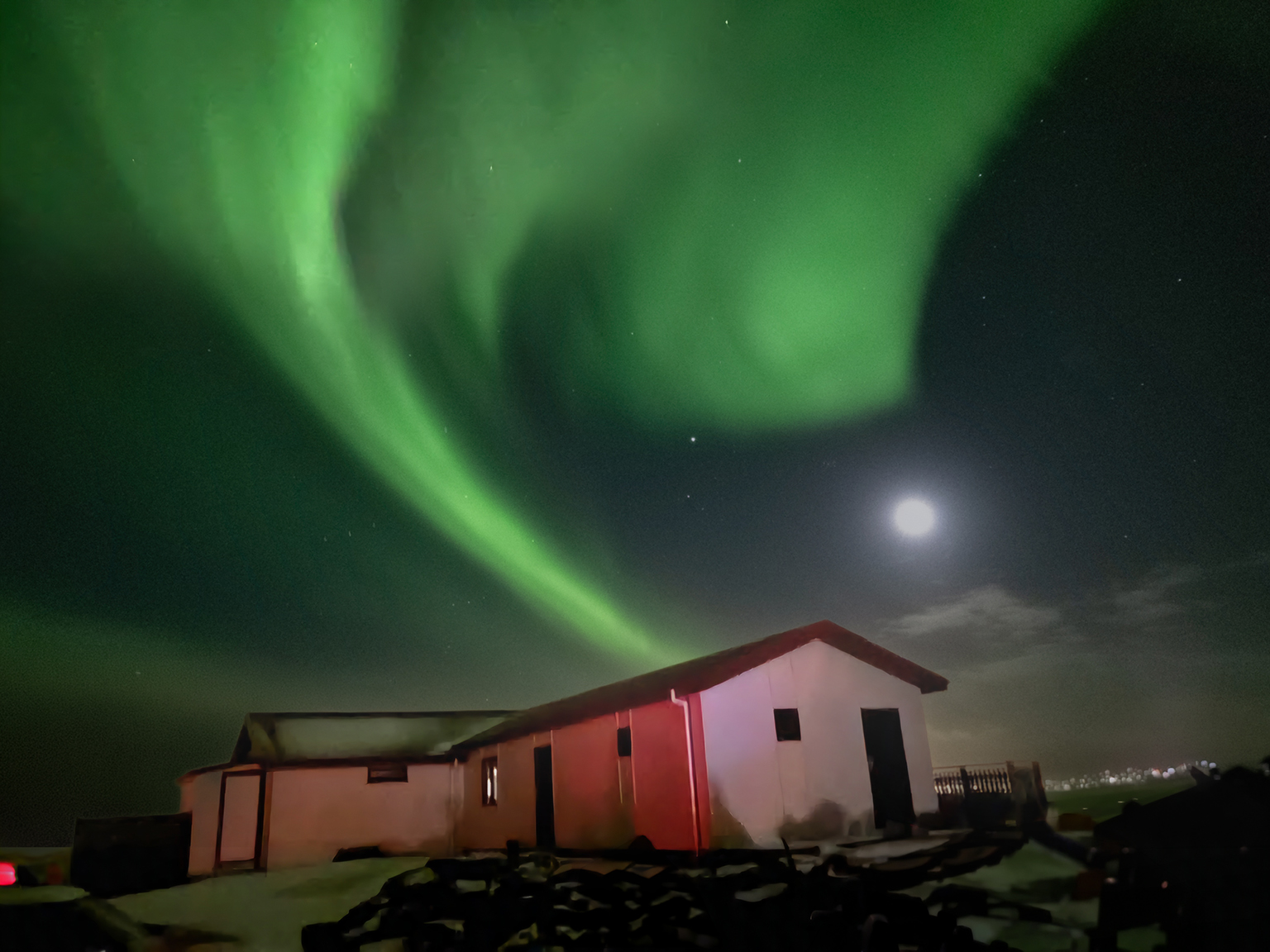
A night-time photograph taken in Iceland showing vivid green aurora borealis sweeping across the sky.

Northern lights (as seen over Iceland)
 

You may also be interested in:


© 2012 science-resources.co.uk. All rights reserved | Design by W3layouts