How do auroras form?
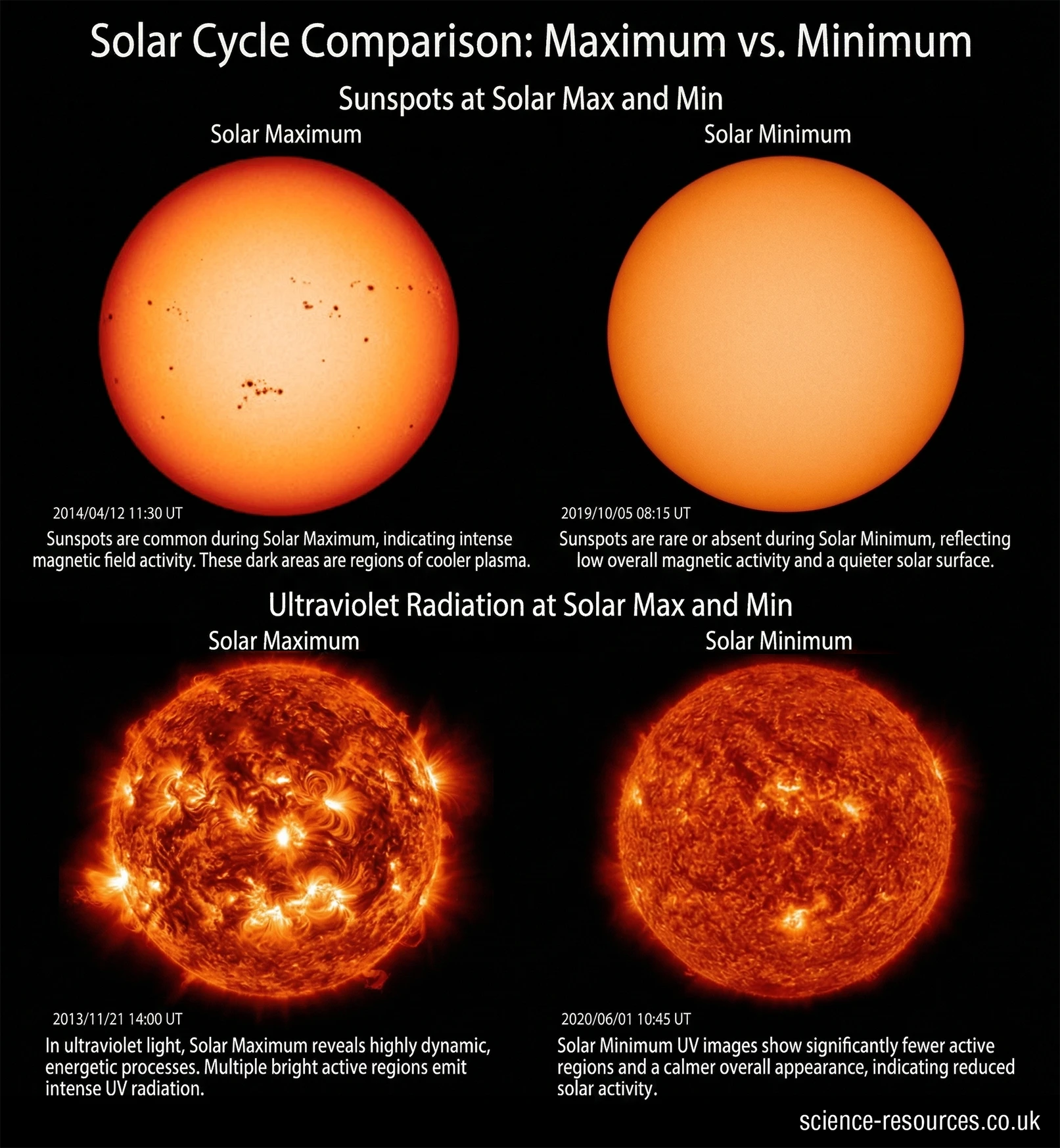
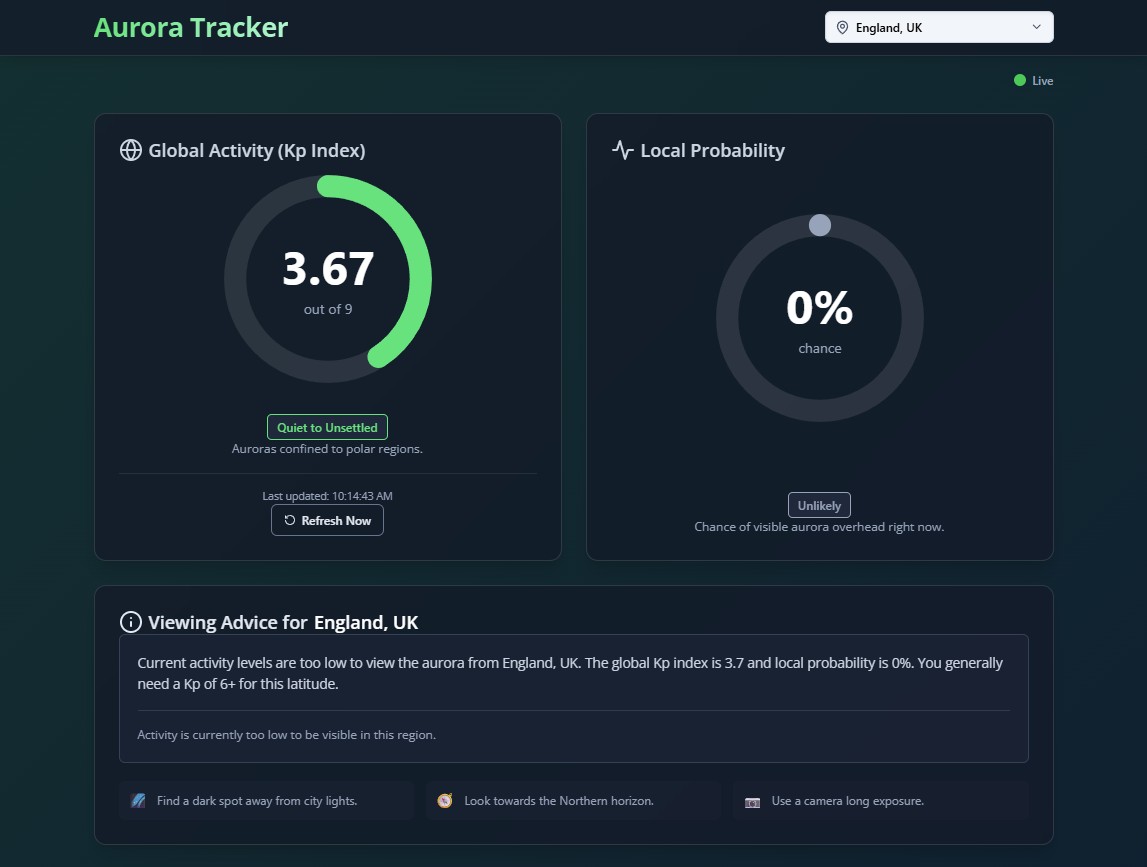
The Northern Lights are a stunning display of glowing, swirling lights in the night sky that have amazed humankind for thousands of years. hese lights appear in places close to the North Pole, while a similar display called the Southern Lights (aurora australis) happens near the South Pole. But what causes them? And how can you see them? According to NASA, the Northern Lights are caused by charged particles from the Sun that travel through space and reach Earth. When these particles hit gases in our atmosphere, energy is released as bright lights. The most stunning auroras happen when the Sun sends out huge clouds of particles, called "coronal mass ejections". Imagine the Sun sneezing out a huge amount of particles towards Earth! Recently, many more people have witnessed the Northern Lights, and there are a couple of reasons for this. The Sun is approaching the peak of its 11-year cycle, which brings an increase in sunspots and coronal mass ejections. As a result, more charged particles are reaching Earth. Since the last solar maximum in 2014, far more people now carry smartphones capable of capturing the aurora. Apps, social media and improved forecasting have also helped more of us know when to look. Solar Maximum and Solar Minimum comparison The Northern Lights are best seen at night when the sky is clear. According to experts, the brightest lights usually appear between 23:00 and midnight local time. Remember, the lights often look brighter in photos because cameras can capture more light than our eyes. You can check whether the Northern Lights will be visible in your area by using our free live aurora tracker. Live aurora tracker dashboard interfaceWhat are the Northern Lights? And how can you see them?
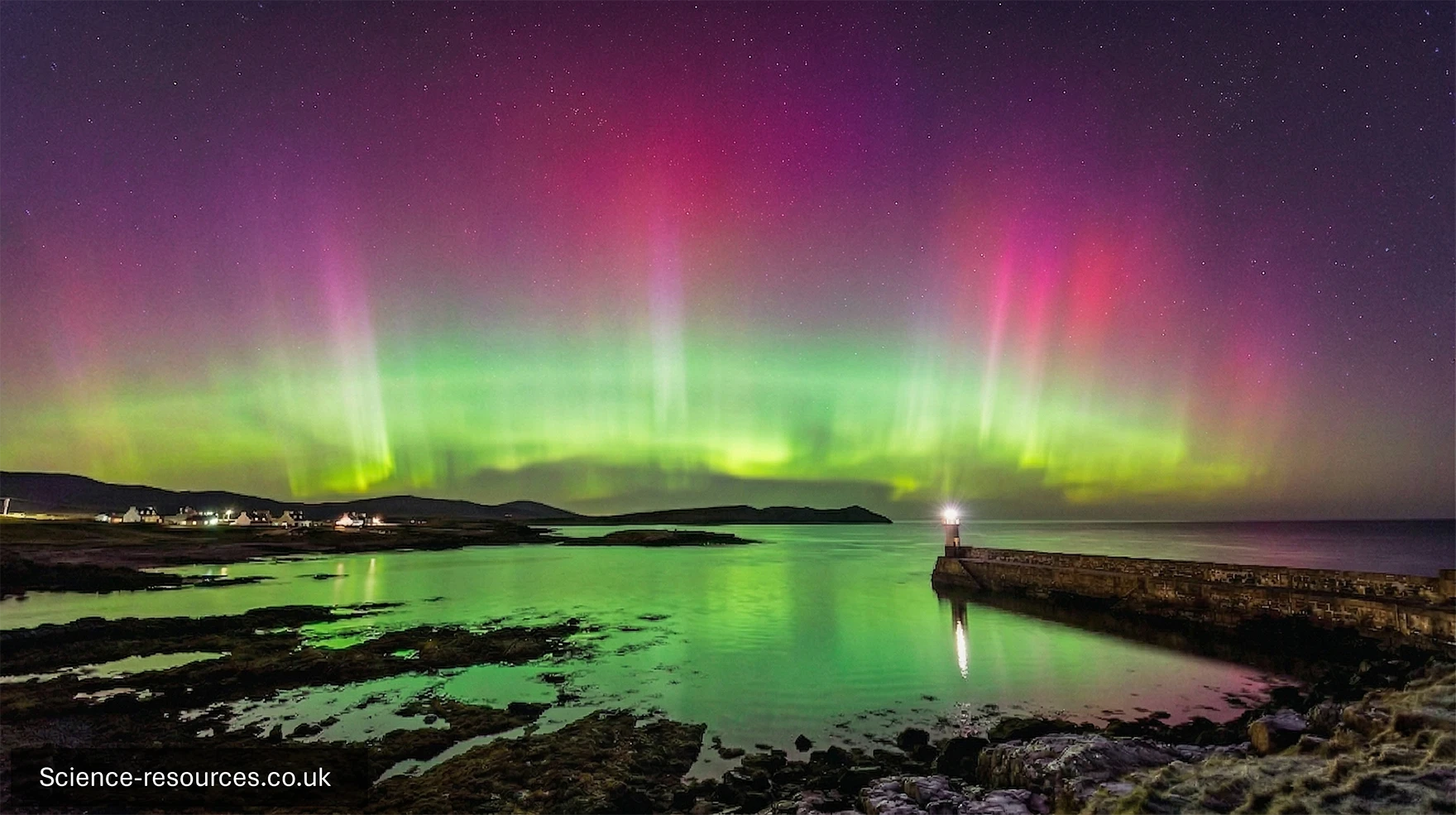 The Northern Lights (Aurora Borealis)
What causes the Northern Lights?
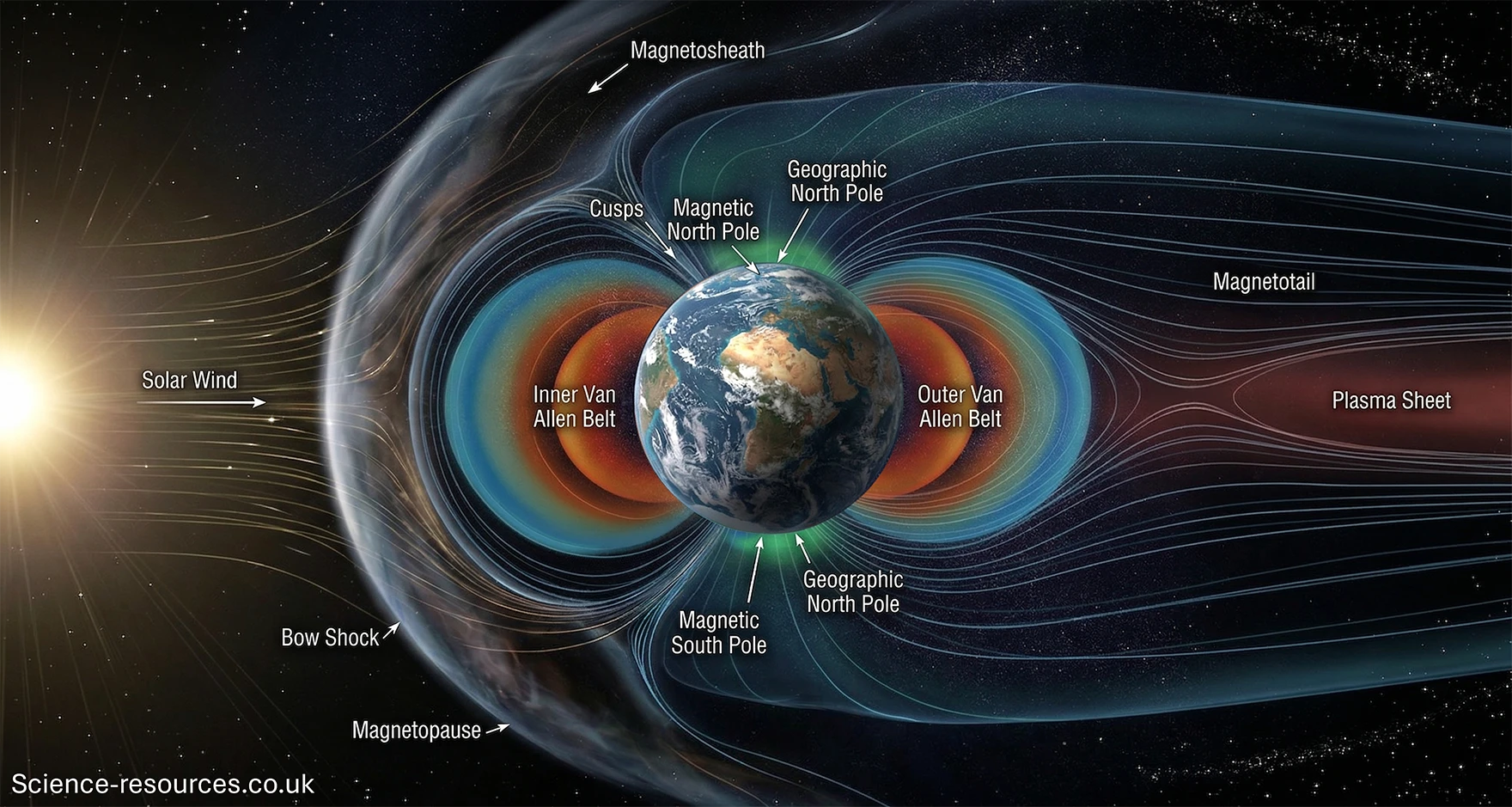 A diagram (not to scale) of how the Earth’s magnetic field acts as a barrier against solar wind.
Why are the Northern Lights more common recently?
When can you see the Northern Lights?
How can you photograph the Northern Lights?
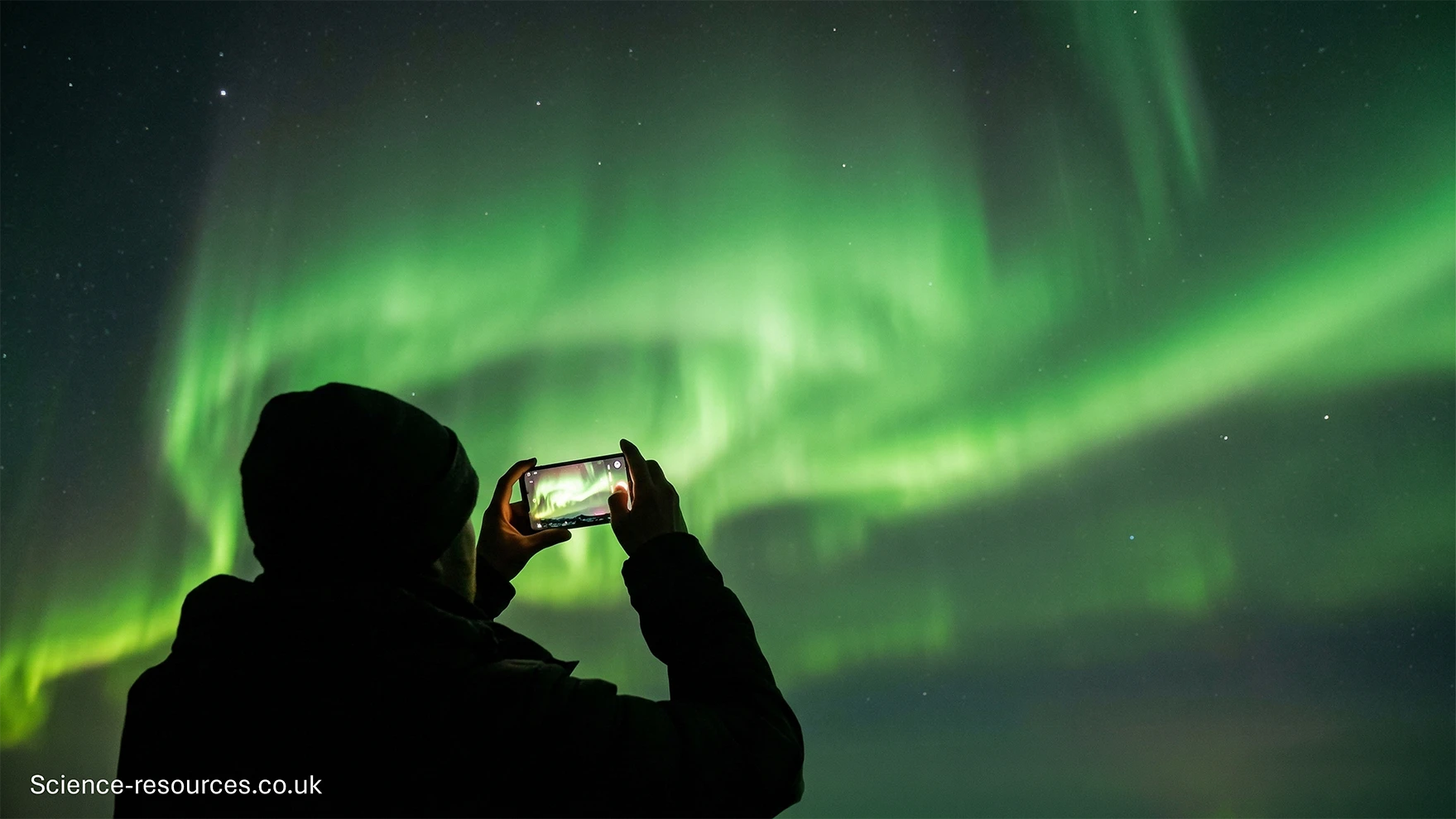 You can use a mobile phone to photograph the Northern Lights
Why do the Northern Lights have different colours?
Different gases in the Earth's atmosphere create different colours when they are hit by solar particles; UCAR explains that:
- Oxygen makes green lights (the most common colour).
- Nitrogen creates purple, blue, and pink lights (these are rarer).
- Oxygen at higher altitudes can produce red lights. These are usually only visible during intense solar storms.
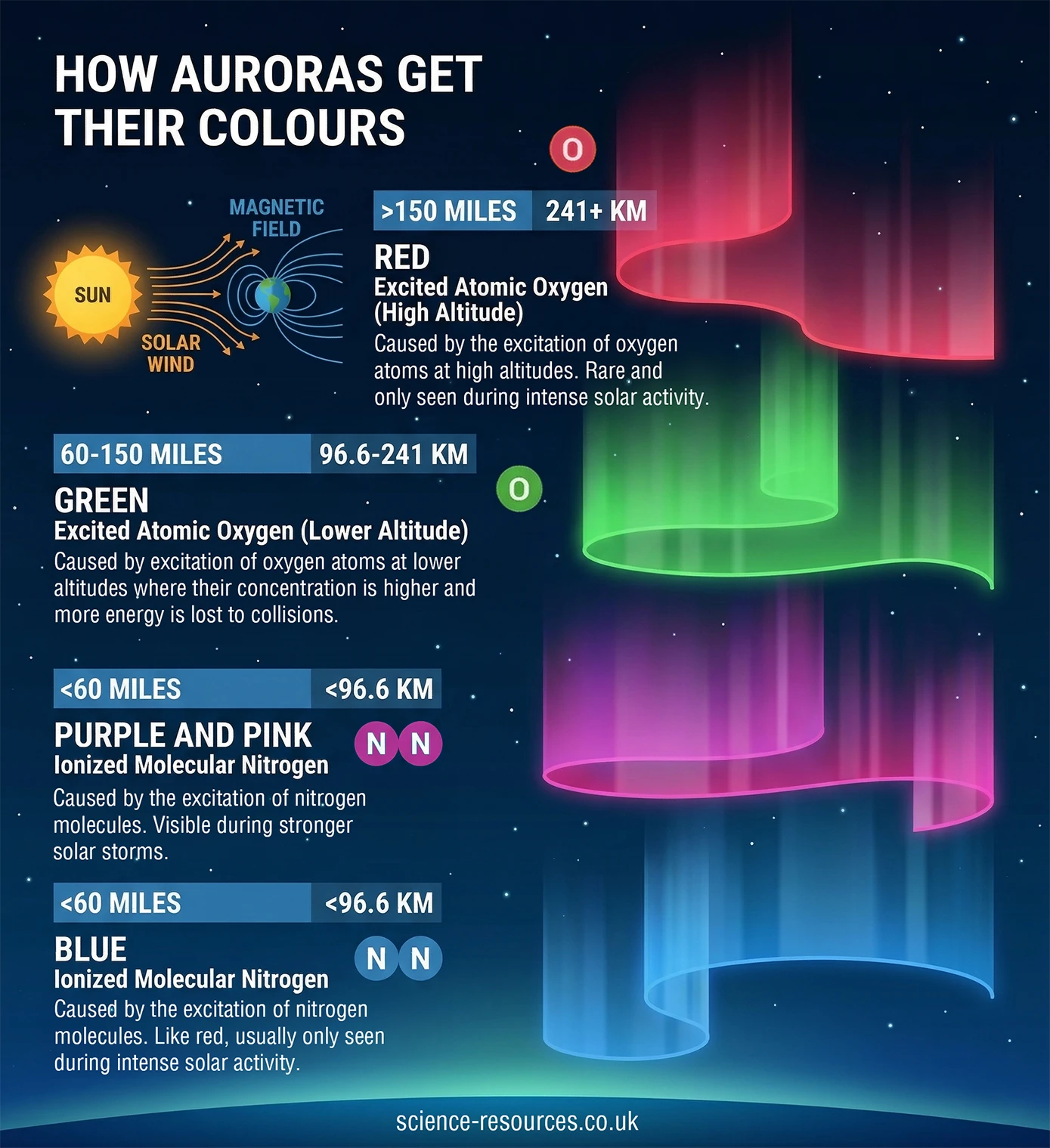
How auroras get their colours
Where can you see the Northern Lights?
The Northern Lights are most often seen in places close to the North Pole, such as Scandinavia, Greenland, Alaska, Canada, and Russia. If the Sun sends out a big enough burst of particles, the lights can be visible in places much further south—even as far as the Caribbean!
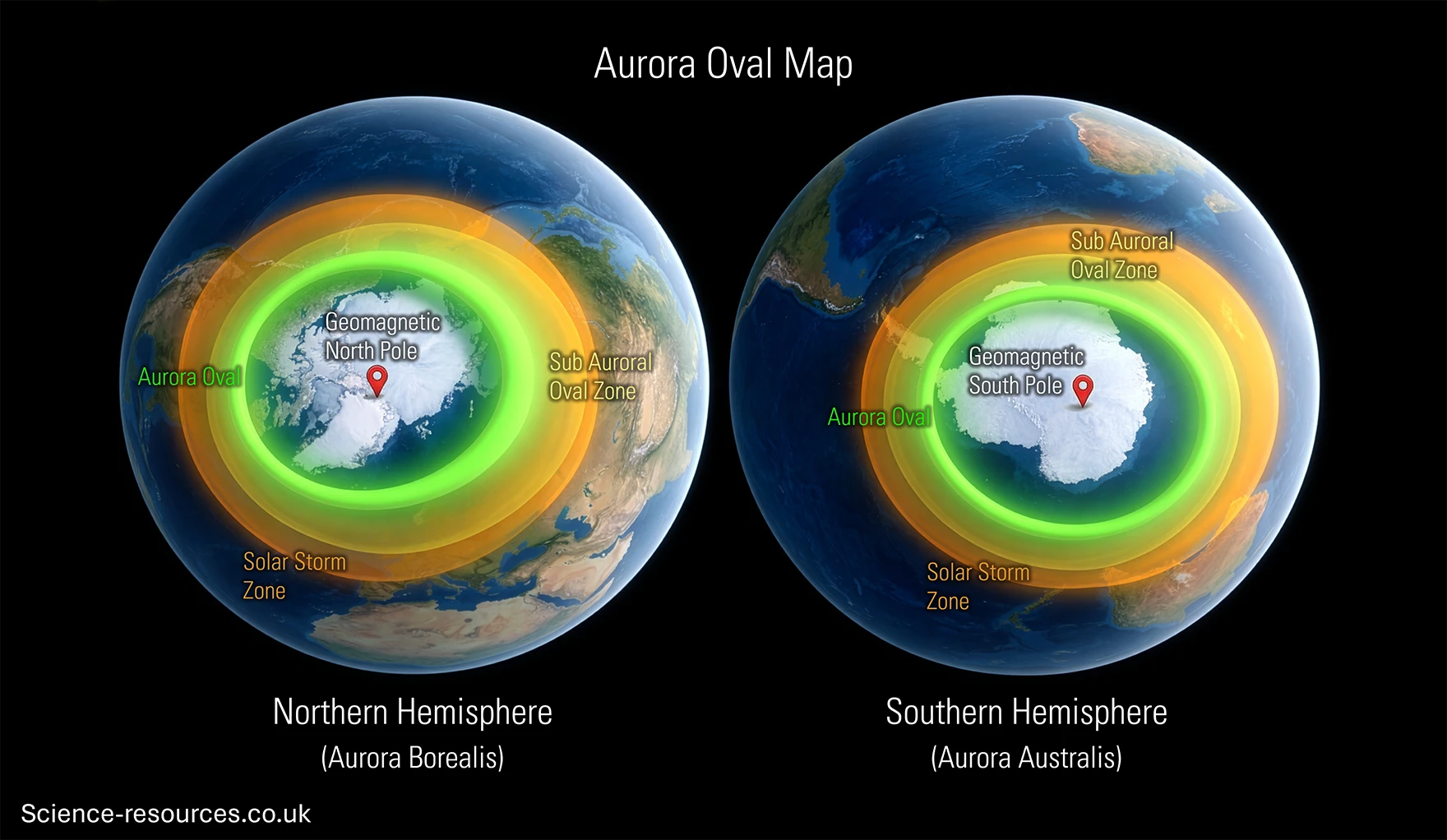 Global arora oval map
Scientists use the Kp-index to predict visibility, as detailed by the NOAA Space Weather Prediction Center. Below are maps showing the most southern extent of where aurora borealis might be observable for different levels of the geomagnetic Kp index (and G-scale). These limits are approximate, considering the averaged relationship between Kp and the auroral latitude, and indicate regions from which aurora may be visible (not necessarily overhead, but sometimes only at the northern horizon).
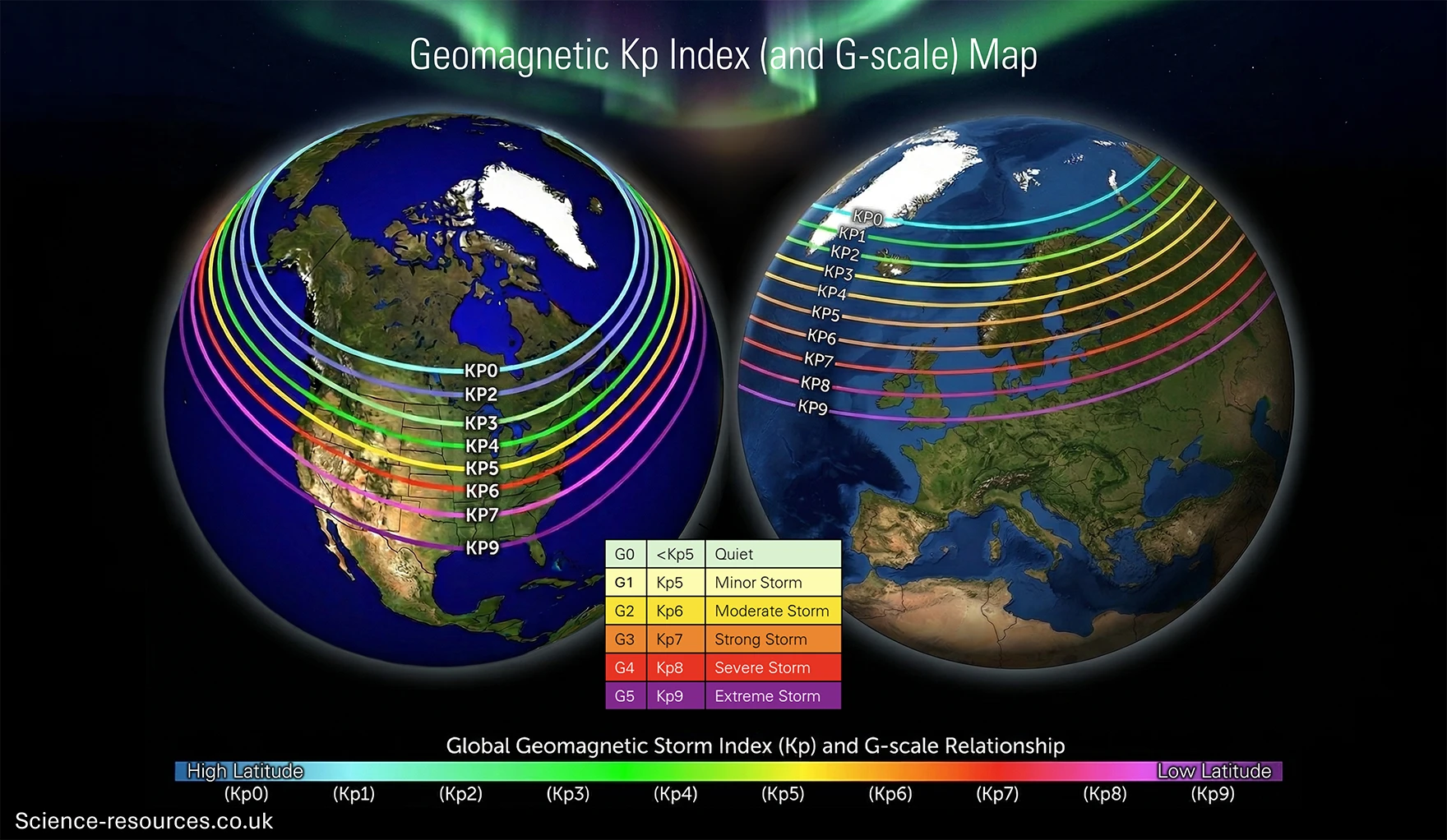 Geomagnetic Kp Index and G-Scale Map
Where is the best place to see the Northern Lights in the UK?
In the UK, the best chances to see the Northern Lights are in Scotland, Northern Ireland, and northern England. However, sometimes they are seen further south, like in Kent, Dorset, or even London, especially during strong solar activity.
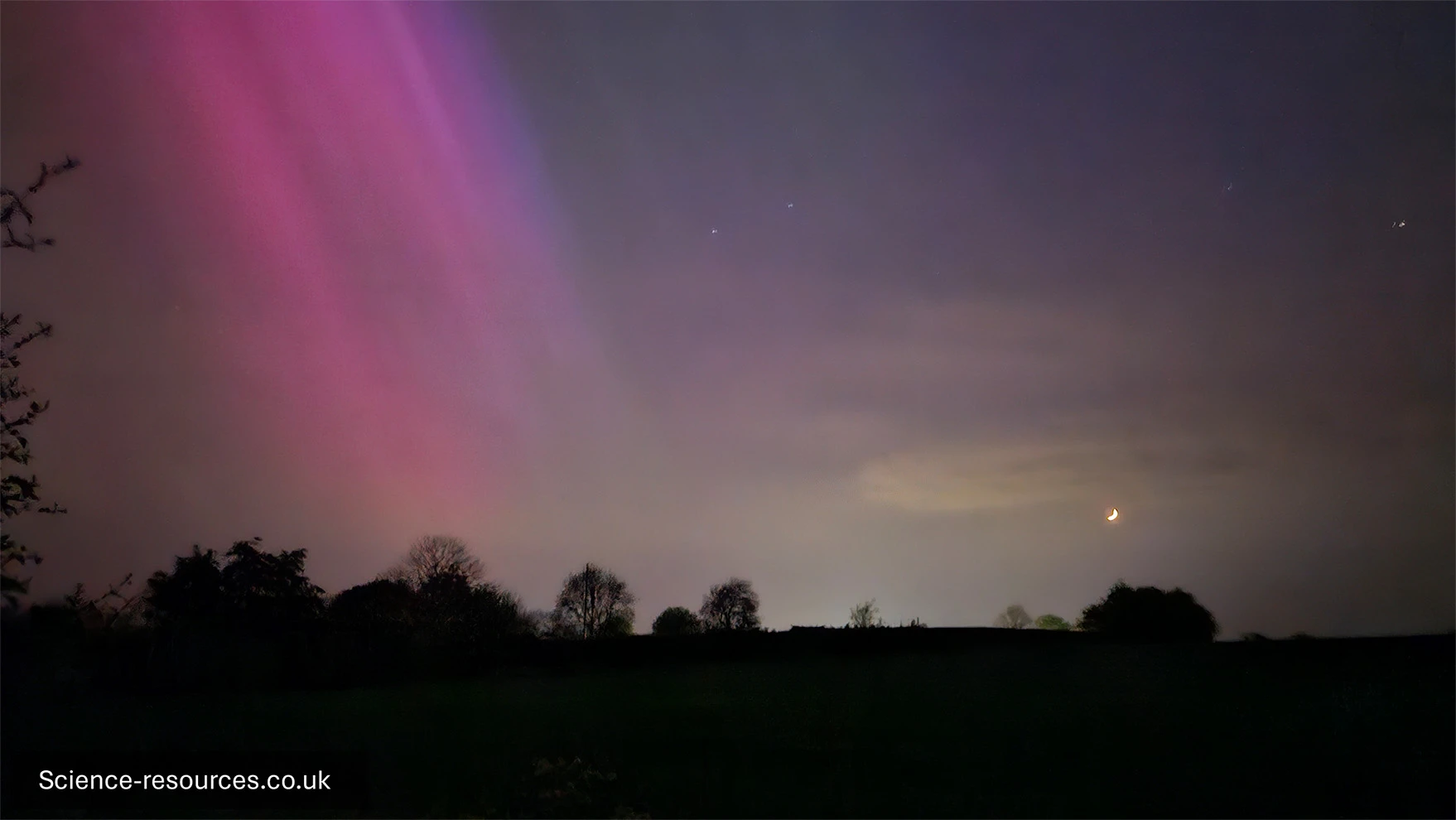 During extreme solar storms, the Northern Light can be as visible as far south as Kent
Which month is best to see the Northern Lights?
The biggest displays of the Northern Lights often happen around the equinoxes (March-April and September-October). This is because there are more magnetic storms during these times.
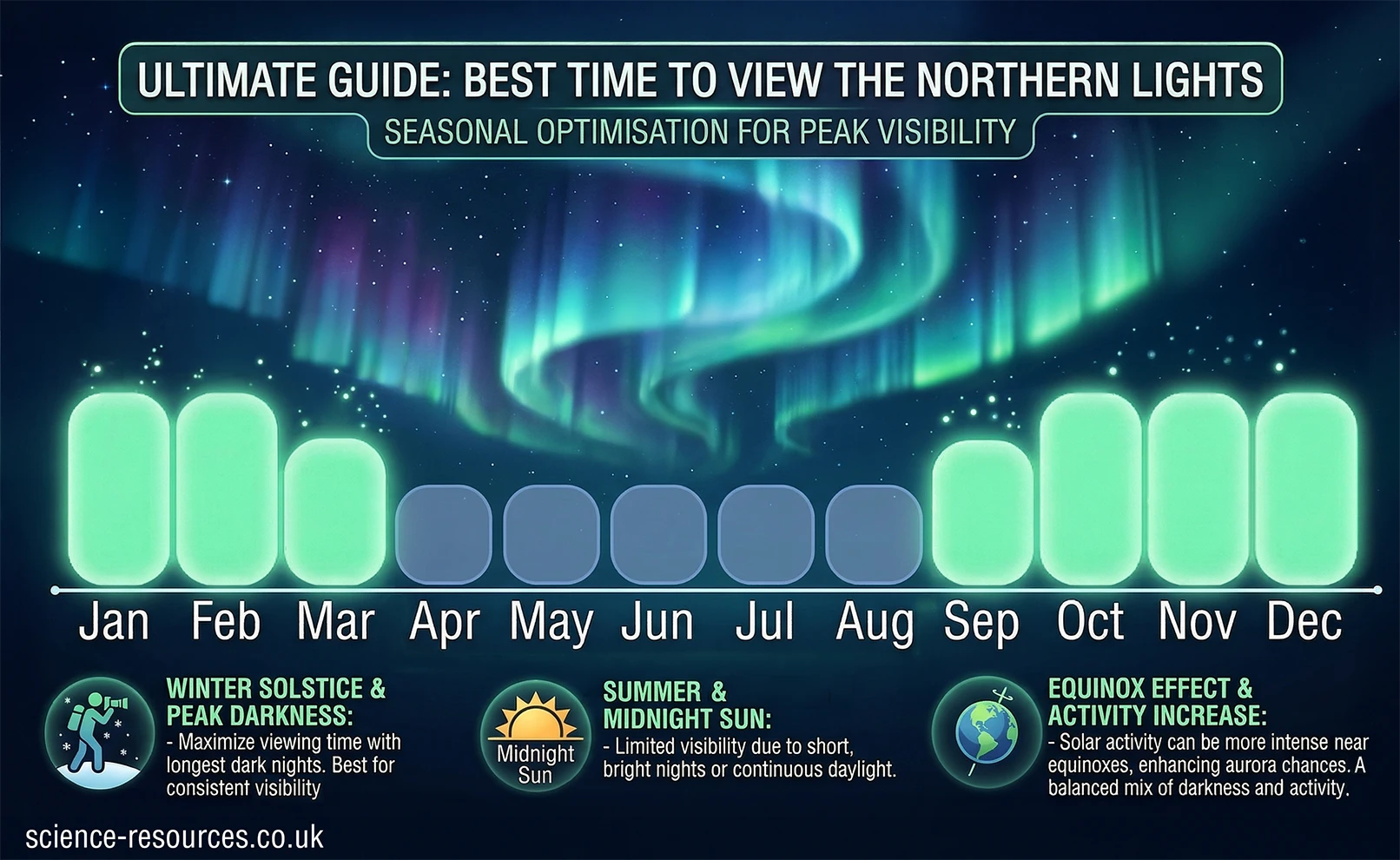 Best months to see the Northern Lights
Are the Aurora Borealis and the Northern Lights the same?
Yes! "Aurora borealis" is the scientific name for the Northern Lights. The name comes from the Roman goddess of dawn, Aurora, and the Greek god of the north wind, Boreas.
Where is the best place to go on holiday to see the Northern Lights?
The Northern Lights are seen most reliably in the "auroral zone" around the Earth's North Pole. Great places to visit include northern Norway, Sweden, Finland, Iceland, Greenland, Canada, Alaska, and northern Russia.
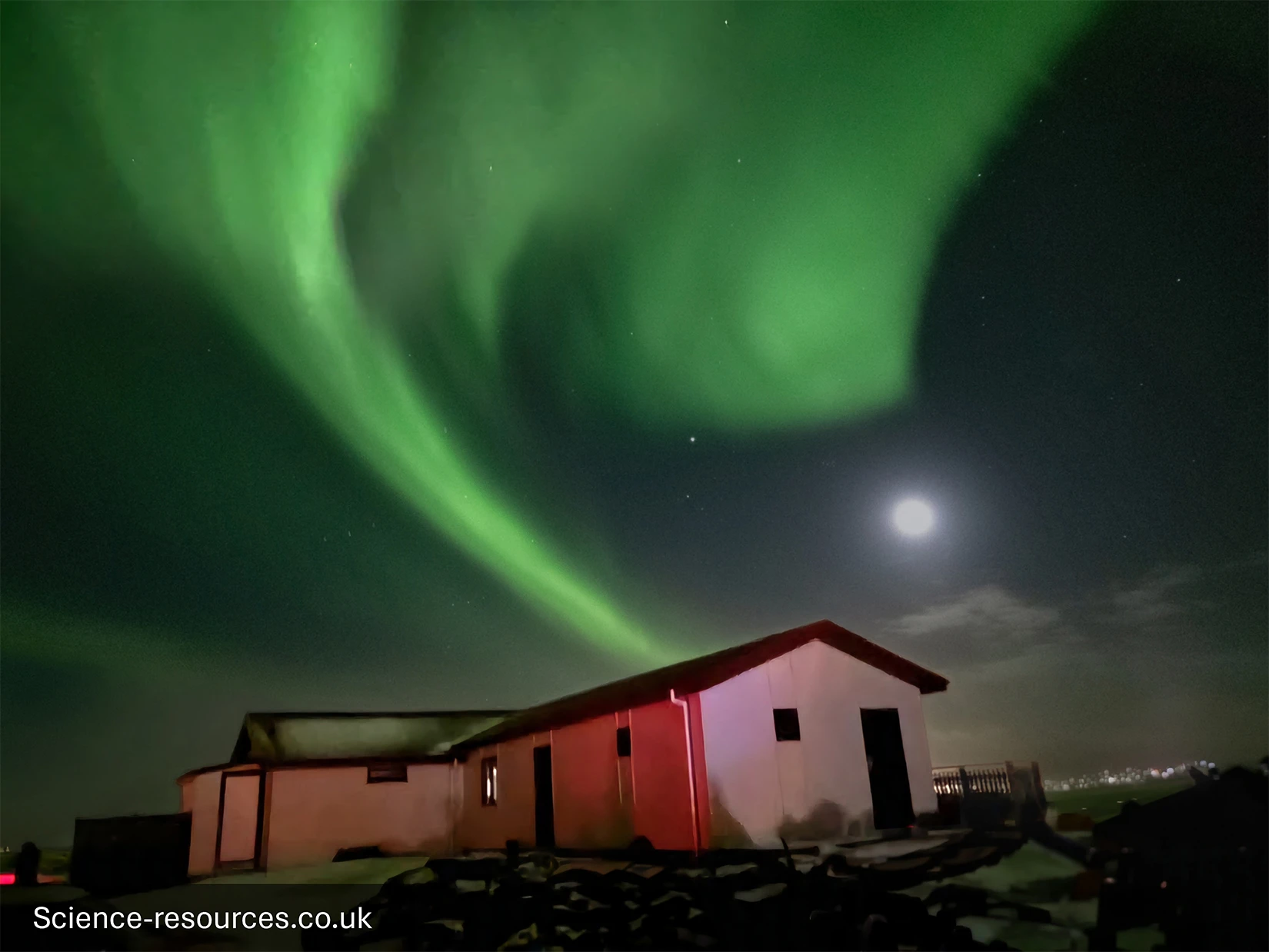 The Northern Lights (as seen from Iceland)
Quick Facts
- The Northern Lights happen when charged particles from the Sun interact with gases in Earth's atmosphere.
- They are most common near the North Pole but can sometimes be seen much further south.
- The best time to see them is at night, especially around midnight, and more often near the equinoxes.
- Green is the most common colour, but red, pink, and purple are possible too.
Useful Resources
- Live aurora tracker - Track whether the Northern Lights are vsibible in your area.
- AuroraWatch UK – Live updates on when the Northern Lights might be visible in the UK.
- British Geological Survey – information about Earth's magnetic field and auroras.
Further Reading & Scientific Sources
To explore more about the physics of the Aurora and real-time space weather tracking, we recommend these authoritative resources:
-
NASA Science: Auroras – A comprehensive overview of how the Sun’s energy creates the Northern and Southern lights.
-
NOAA Space Weather Prediction Center – The official source for space weather data, including tutorials on the Kp-index and geomagnetic activity.
-
UCAR Center for Science Education – Detailed explanations of how different atmospheric gases (Oxygen and Nitrogen) produce specific aurora colors.
-
ESA: Space for Kids – An excellent resource from the European Space Agency designed specifically for KS3-level understanding.
-
Britannica: Aurora Physics – A peer-reviewed encyclopedia entry on the historical and scientific discovery of the aurora.
Videos
For a visual breakdown of how charged particles interact with the Earth's magnetic field, watch this educational guide from NASA: Video: Space Weather and Earth's Aurora (NASA)
Test your understanding of the interaction between the Sun and Earth's magnetic field that creates the Northern and Southern Lights. 1. What is the stream of charged particles released from the Sun called? 2. Which scientific name is used specifically for the 'Southern Lights'? 3. What part of the Earth's environment funnels charged particles toward the poles? 4. What is actually happening when the sky glows during an aurora? 5. Why do we see different colours, such as green or red, in an aurora?🔬 Knowledge Check: How Auroras Form
Click to Reveal Answers